

Once the structure of a garden room is in place, the interior finishes are what determine how the space feels to spend time in. The right combination of flooring, wall finishes and ceiling treatments shapes everything from warmth and acoustics to how easy the room is to clean and maintain.
For homeowners exploring garden room interior ideas, the choices can feel overwhelming, particularly when different uses pull in different directions. This guide works through the main options for each surface, comparing them on performance, practicality and style, so you can make decisions that suit how you plan to use the space.
Whether you’re after insulated garden room interiors built for year-round comfort or a finish that simply looks great, there’s a practical answer for every brief and every budget.
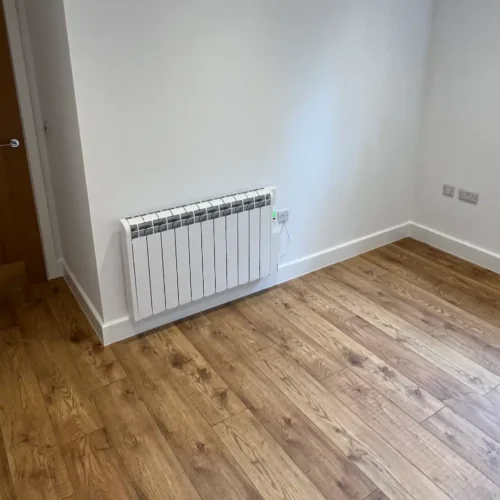
Why Interior Finishes Matter in a Garden Room
Stylish garden room interiors start with material choices that balance appearance with long-term performance. What works beautifully in a leisure room may be entirely wrong for a gym or a home office and getting that match right from the outset saves time, money and inconvenience later.
Flooring takes more punishment than any other surface in a garden room. It needs to stand up to daily use, handle temperature fluctuations, and still look good years down the line. So, let’s look at how the main options compare.
Vinyl Flooring
Vinyl is one of the most practical garden room flooring options available, and its popularity is well earned. It’s water resistant, simple to clean, and available in a wide range of wood and stone-effect designs that suit modern interiors well. For home offices, hobby rooms, gyms and multi-use family spaces, low maintenance garden room interiors are often the priority, and vinyl delivers on that without compromise.
The trade-off is that it can feel slightly less premium underfoot than natural materials, though the quality gap has narrowed considerably with better products.
Engineered Wood Flooring
For buyers who want warmth and a more natural aesthetic, engineered wood is a strong choice. It’s dimensionally more stable than solid timber, which matters in a garden room where temperature and humidity levels can shift more than in the main house. The result is a finish that suits garden room interior ideas at the more considered end of the market, connecting the space visually with the home and giving it the feel of a proper room rather than an outbuilding. Luxury garden room interiors frequently feature engineered wood for exactly this reason.
It does require more care than vinyl and carries a higher upfront cost, but for a garden lounge, guest room or premium home office, it earns its place.
Tiles
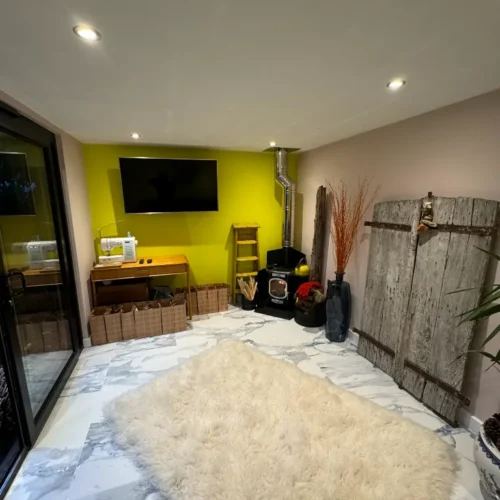
Tiles are the most hardwearing surface you can put in a garden room. Durable flooring for garden rooms used as gyms, commercial spaces or high-traffic family rooms benefits from the kind of resilience tiles offer, and they’re particularly well suited to layouts with underfloor heating. The range of finishes, including stone and concrete effects, also makes them a credible choice for hardwearing finishes for garden rooms where a clean, architectural look is the goal.
The downsides are that they can feel cold underfoot without a heat source beneath them and that installation costs tend to be higher than other options.
Which Is the Best Flooring for Garden Rooms?
There’s no single answer, because the right flooring depends on how the room will be used and what the homeowner wants from it.
As a starting point:
- Vinyl: Best for easy maintenance, multi-use family rooms, gyms and commercial or education settings where durability and washability matter most.
- Engineered Wood: Best for home offices, garden lounges and guest rooms where a warmer, more refined finish is the priority.
- Tiles: Best for garden gyms, hospitality spaces and any layout incorporating underfloor heating, where a sleek, architectural finish suits the brief.
For garden office interior ideas in particular, engineered wood tends to strike the right balance between practicality and the kind of considered aesthetic that makes a workspace feel genuinely pleasant to spend time in.
Best Wall Finishes for Stylish and Practical Garden Room Interiors
Modern garden room finishes for walls have moved well beyond a simple coat of paint. The options now range from clean, versatile plasterboard through to timber panelling and acoustic systems, each bringing a different character to the space.
Painted Plasterboard
Painted plasterboard is the most straightforward wall finish and the most used. It gives a clean, neutral base that works across virtually any use case, from garden room interior design ideas that lean into a minimalist aesthetic to spaces that need flexibility to evolve over time. It’s cost-effective, easy to repaint or update, and keeps the focus on furniture and fittings rather than the walls themselves. For most homeowners building a home office, studio or leisure room, it’s a solid default.
Interior Wall Cladding or Panelling
Where a painted finish gives you a blank canvas, garden room interior wall cladding creates immediate character. Timber slats, tongue-and-groove panelling and decorative board systems all add texture and warmth, and they work equally well in contemporary and more rustic-inspired interiors. A feature wall in natural timber can anchor a room and give it a finish that feels genuinely considered rather than functional.
The cost is higher than a simple painted finish, but for buyers working through garden room interior ideas who want the space to feel like more than a box, panelling delivers a lot of visual impact for the investment.
Acoustic Panels for Garden Rooms
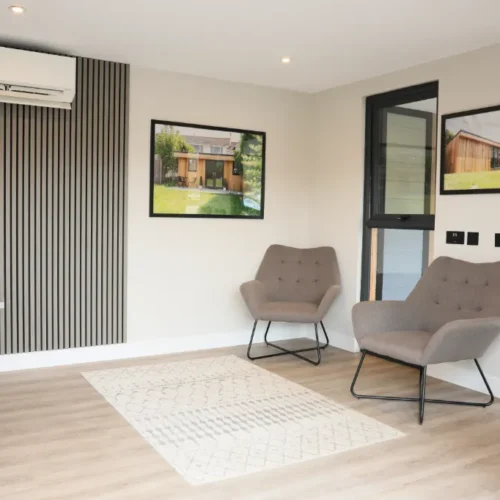
Acoustic panels for garden rooms serve a dual purpose: they improve the way a space sounds and, when chosen well, they look the part too. Slatted timber acoustic panels and fabric-backed systems both absorb sound effectively, reducing echo and improving audio clarity for video calls, recording, focused work and teaching.
For garden offices, music rooms, creative studios and education buildings, this is a material choice with a clear functional justification. It’s also worth noting that acoustic treatment doesn’t have to dominate a room; well-designed panels integrate naturally into the interior without signalling that the space is a specialist installation.
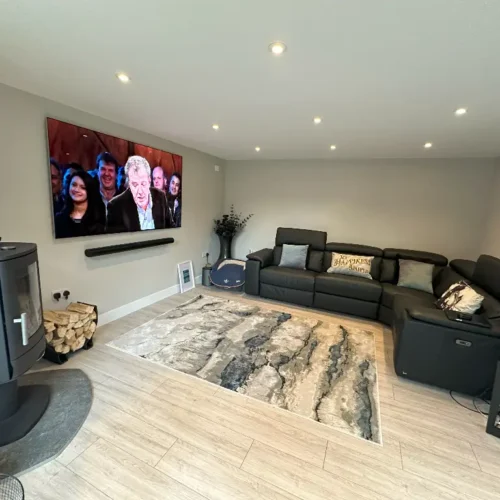
Ceiling Finishes for Garden Rooms Compared
Ceiling finishes for garden rooms are often treated as an afterthought, but they have a real bearing on how a space feels. The right choice can make a room feel larger, warmer or better suited to focused work or relaxation.
Smooth Painted Ceilings
A smooth, painted ceiling is the most versatile option and tends to work well in smaller garden rooms where keeping the space feeling open and bright is the priority. It reflects light effectively, contributes to a clean overall aesthetic and carries no additional cost beyond the standard build. For most uses, it’s a sensible default that supports rather than competes with the other finishes in the room.
Timber-Look Ceiling Finishes
A timber-look ceiling brings warmth and a sense of craftsmanship to a garden room interior. Garden room interior ideas that draw on Scandinavian or natural aesthetics benefit particularly from this treatment, and it works well in garden retreats, reading rooms and wellness spaces where the goal is a calm, grounded environment.
Luxury garden room interiors often use a timber ceiling as a deliberate design decision that ties the space together, complementing natural materials elsewhere in the build. It’s a more involved finish than a painted ceiling, but the visual reward is significant.
Ceilings with Acoustic Treatment
Acoustic ceiling treatment is a practical consideration for any garden room used intensively for work, learning, recording or hospitality. Sound absorption overhead reduces the sense of echo and improves the acoustic quality of the space, which makes a meaningful difference in insulated garden room interiors where hard surfaces can cause sound to bounce.
Acoustic ceiling panels can be integrated subtly or used as a visible design element, and in multi-functional buildings they’re worth considering alongside acoustic wall panels as part of a coherent approach to sound management.
What Is the Right Ceiling Finish for Your Garden Room?
The answer depends on the priorities for the space. A smooth painted ceiling suits most standard uses and keeps the build straightforward. A timber ceiling adds warmth and character to rooms where atmosphere is part of the brief. Acoustic treatment is worth the investment wherever sound quality has a direct bearing on how well the space functions.
In every case, ceiling finishes work best when they’re considered alongside the wall and floor choices rather than selected in isolation, since it’s the combination of all three surfaces that determines how a room feels as a whole.
How to Choose the Right Interior Finish for Your Garden Room
The most useful starting point is the intended use of the space. A home office has different demands from a gym, a garden room interior design ideas shortlist for a leisure room looks different from one for a guest room, and a commercial hospitality building has requirements that a family hobby room does not. Once the use is clear, the following factors help narrow the choices.
- Maintenance: How easy does the space need to be to clean? Vinyl flooring and painted plasterboard are straightforward; engineered wood and wall panelling require more care.
- Durability: High-footfall spaces, gym use and commercial applications all call for surfaces that can handle heavy use without showing it.
- Acoustics: For offices, teaching spaces, music rooms and recording environments, acoustic treatment for walls and ceilings is a functional necessity rather than a luxury.
- Style: Consider whether the brief calls for a modern, clean finish, a warm and natural aesthetic, or something more minimal and architectural. Garden room interior ideas range across all of these, and the finish should reflect the intended character of the space.
- Budget: Vinyl and painted plasterboard keep costs down; engineered wood, wall cladding and acoustic systems represent a higher investment. It’s worth deciding where the money should go based on what will have the most impact for the specific use.
Creating a Cohesive Garden Room Interior
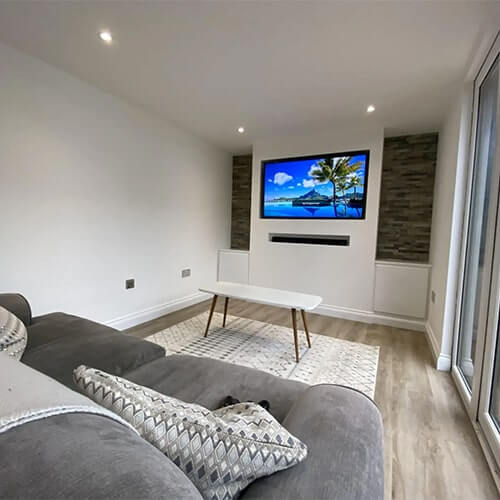
Selecting individual finishes is one thing; making them work together is another. The most reliable approach is to look at flooring, walls and ceiling together from the outset, thinking about how they interact visually and functionally rather than specifying each one in isolation.
Lighting, furniture and the connection with the garden all feed into this as well. Interior finishes that echo the materials used in the main house help the garden room read as an extension of the home rather than a separate structure. The external cladding is part of the picture too: a cedar exterior and a timber-panelled interior create a coherent character that a mismatched combination would undermine. Garden room interior ideas that start with the overall aesthetic and work inwards tend to produce the best results.
Final Thoughts: Choosing Interior Finishes That Look Good and Last
There is no single formula for the best garden room interior. Vinyl, engineered wood and tiles each have their place depending on use, traffic and budget. Painted plasterboard, wall cladding and acoustic panels all serve different purposes and different aesthetics. The ceiling finish that suits a compact home office is not the one that makes a garden retreat feel special.
What makes the difference is approaching these choices with the intended use and the full design in mind from the start. Garden Room Solutions builds bespoke garden rooms from the ground up, advising on both structure and interior finish so that every element of the space works together.
If you’re planning a garden room and want expert guidance on the options, get in touch using our contact form or call us on 01202 081198 to discuss your project.