
A building is not complete without a roof, and it’s an important decision to choose the right roof for your needs and environment – therefore, a lot of thought should go into it. There are a number of garden room roof options, each with its own benefits and drawbacks to consider.
The roof you choose will impact both the style and functionality of the space. Plus, certain types of roofs will do better with insulating the space or remaining weather-resistant – something that is needed in England.
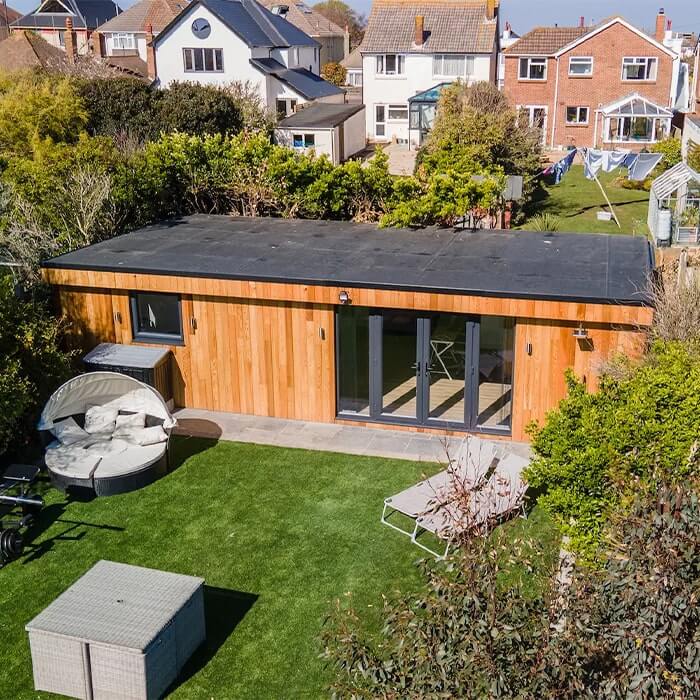
At Garden Room Solutions, we design and build bespoke garden rooms across Dorset and Hampshire. We pride ourselves on the quality and craftsmanship of our builds, and to ensure this, we use a flat roof with rubber EPDM roof covering as standard for all of our installations. However, it is always worth knowing what your options are, and we will be willing to discuss alternative options with you should you wish.
In this blog, we list your options, explaining their advantages and disadvantages.
EPDM Rubber Roofing
EPDM (Ethylene Propylene Diene Monomer) is a thick rubber sheet that is water-resistant.
The material is perfect for flat garden room roofs because of its characteristics.
Benefits of EPDM include:
- Long lifespan – can last about 50 years when installed and maintained properly
- Superior weather resistance – can withstand intense sun and freezing temperatures
- Waterproof and prevents leaks – its single-ply membrane acts as a waterproof barrier
- Environmentally friendly – primarily made from recycled materials
- Low maintenance – doesn’t require regular sealing or repairs
- Flexible and durable – can move with the building as it settles without cracking or stretching
- Compatibility with other roofs – can work with additional features such as insulation panels or living roofs
Things you will need to consider include:
- Susceptibility to punctures – if not covered in a protective layer
- Aesthetic limitations – typically available in matt black
- Seam vulnerabilities – when covering large areas, seams can be weak points
When installed by professionals, these factors are considered, and measures are put in place to deal with them. For example, roof covering prevents punctures or seams are laid in a specific way to ensure they don’t leak.
Bitumen Felt Shingles
Bitumen felt sheets are a good budget-friendly option for low-sloped or flat garden room roofs.
The benefits of this roofing option are:
- Affordability – it is cost-effective
- Ease of installation – it is relatively simple to install, especially on smaller structures
- Weather resistance – it has effective waterproofing
- Low maintenance – minimal upkeep is needed
- Durability – modern products last between 15-20 years
- Versatile design – can be installed in various styles
- Compatibility with insulation – can be paired with insulation layers
Factors you also need to consider are:
- Limited lifespan – compared to other options, these don’t last long
- Vulnerability to weather damage – it is prone to damage in extreme weather
- Susceptibility to leaks – cracks and splits form as it ages, causing leaks
- Long-term maintenance – as it ages, it requires more attention
- Potential environmental impact – made from petroleum, so it isn’t eco-friendly
Insulated Panels
Insulated panels are a popular choice for garden room roofs because of their thermal efficiency.
Advantages of this roof option include:
- Thermal insulation – designed specifically to provide thermal insulation
- Quick and easy installation – lightweight and premanufactured for easy fitting
- Reduced noise – insulation provides soundproofing qualities too
- Weather resistance – can withstand various weather conditions
- Durable – resist warping, rust and decay, so last
- Low maintenance – not much maintenance is needed for them to last
- Eco-friendly – contributes to energy efficiency to lower the space’s environmental impact
However, the cons of this roofing option are:
- Higher upfront costs – compared to other options, these can be expensive
- Limited aesthetic options – have a more modern utilitarian look
- Potential for water ingress – poor fitting could lead to water leaks
- Limited flexibility – best suited for low-slope or flat roofs
- Reduced natural ventilation – insulation prevents ventilation
Living Roof (Green Roof)
Living roofs, or green roofs, are a type of roof system that incorporates vegetation, soil and waterproofing membrane to create a garden-like environment.
Benefits of this type of roof include:
- Environmental benefits – provide habitats for wildlife and plants to improve air quality
- Thermal insulation – regulate indoor temperatures
- Stormwater management – absorb water, reducing runoff and flooding
- Aesthetic appeal – add luscious green and colourful plants to your space
- Noise reduction – vegetation and soil absorb sound
- Sustainability – utilise natural materials and promote sustainable practices
Disadvantages of living roofs as a garden room roof option include:
- Higher initial costs – can be more expensive to install
- Maintenance requirements – as with any garden, care and attention are needed
- Structural considerations – soil and plants add weight to the structure
- Limited plant selection – need to choose plants that will thrive in those conditions
- Watering and irrigation needs – additional water might be needed, but drainage of excess water needs to be considered
- Potential for water damage – if not installed properly, can lead to water leaks and damage
Corrugated Sheets
Corrugated sheets have a unique profile, offering aesthetic and functional benefits.
Advantages of this garden room roof option include:
- Durability – highly durable and can withstand extreme weather
- Lightweight – compared to other options, are lightweight
- Ease of installation – straightforward design makes them easy to fit
- Cost-effective – more affordable and long-lasting
- Aesthetic variety – available in various colours, materials and finishes
- Waterproofing – can be watertight, and channels water away
- Good insulation – can be combined with insulation for thermal efficiency
The drawbacks of this option are:
- Noise issues – can be loud during rainfall or hail
- Limited insulation – without additional insulation, they don’t provide insulation
- Susceptibility to dents – can be prone to dents
- Thermal expansion – can expand and contract with weather changes, leading to issues
- Maintenance needs – periodic inspections needed for rust, corrosion or damage
Slate Effect Tiles
Slate effect tiles mimic the look of traditional slate tiles.
Their advantages include:
- Aesthetic appeal – classic and elegant look to enhance visual appeal
- Cost-effective – more affordable than general slate
- Lightweight – lighter than slate tiles, so easier to handle and install
- Durability – designed to be durable and weather-resistant
- Low maintenance – requires minimal maintenance
- Variety of styles – come in a range of colours and finishes
- Eco-friendly – usually made from recycled materials
Cons include:
- Potential for reduced lifespan – especially compared to natural slate
- Vulnerable to impact damage – susceptible to cracking or breaking from heavy impacts
- Installation complexity – specific skills and techniques required
- Colour fading over time – some slate effect products can fade in sunlight
- Limited authenticity – doesn’t have the same weight or texture as traditional slate
Cedar Shingles
Cedar shingles can enhance the overall look of a garden room as they are made from cedar wood.
Benefits include:
- Aesthetic appeal – provide a warm, natural look
- Natural insulation – cedar wood has natural insulation properties
- Durability – when maintained, can last between 30-50 years
- Eco-friendly – is a renewable source and can be sustainably harvested
- Weather resistant – effective at shedding water
- Low maintenance – periodic maintenance is needed but overall is low-maintenance
- Sound dampening – has sound-absorbing qualities
Considerations you will need to think about are:
- Higher initial costs – have more expensive up-front costs
- Maintenance requirements – regular upkeep is needed
- Susceptibility to fire – as it is wood, there is a fire risk
- Colour change over time – can weather and change colour over time
- Limited availability – may not always be readily available
- Potential warping and cracking – temperature changes can cause warping and cracking
Metal Roof Sheets
Metal roof sheets offer a durable and versatile garden room roof option.
The benefits of this option are:
- Durability – highly durable and can withstand harsh weather conditions
- Low maintenance – no need for regular maintenance
- Energy efficiency – reflective properties make them energy efficient
- Lightweight – lighter than other options
- Aesthetic variety – available in various colours, staples and finishes
- Fire resistance – non-combustible and resistant to fire
- Recyclability – often made from recycled content and can be recycled again
Why do we choose EPDM Rubber Flat Roofs For Our Garden Room Roofs?
As standard, we use EPDM rubber flat roofs and coverings for our garden room roofs.
This is for several reasons:
- Durability – lasts 50+ years with minimal wear
- Strength – resistant to damage and pressure, maintaining structural integrity
- Weather resistance – withstands harsh weather, including UV rays, rain, and snow
- Low maintenance – requires minimal upkeep, perfect for busy homeowners
- Environmental friendliness – made from recycled materials, making it a sustainable choice
- Insulation – provides excellent insulation, making the space usable year-round
Discuss Garden Room Roof Options With Experts
As you can tell, there are many things to consider when it comes to choosing a garden room roof. With so many options with so many pros and cons, it can be hard to decide.
But fear not! The team at Garden Room Solutions are specialists, and with their 20 years of experience in construction, design and renovations, we know everything there is to know about roofing options.
While we use flat EPDM roofs and coverings as standard for our garden rooms, we are able to chat about other options, providing balanced conversations so that you can make an informed choice.
Contact us today to discuss your roofing options with an expert and get to know more about the garden rooms we design and install.
Call us on 01202 081198, visit our showroom in Wimborne or complete our online contact form.