
Your garden room should feel like a sanctuary, so why leave privacy to chance? More homeowners than ever are adding garden rooms to their properties, from home offices and creative studios to wellness retreats, and commercial spaces. But there’s often a concern, and that’s neighbours, nearby boundaries, and footpaths making the space feel overlooked.
Garden room privacy is a design feature, not an afterthought, and getting it right means balancing natural light, airflow, planning considerations, and aesthetic appeal in equal measure. At Garden Room Solutions, we factor privacy into the specification stage from day one, ensuring your finished garden room feels as comfortable as it looks. See how privacy screens for garden rooms are easy to install and can make all the difference.
Why Garden Room Privacy Matters
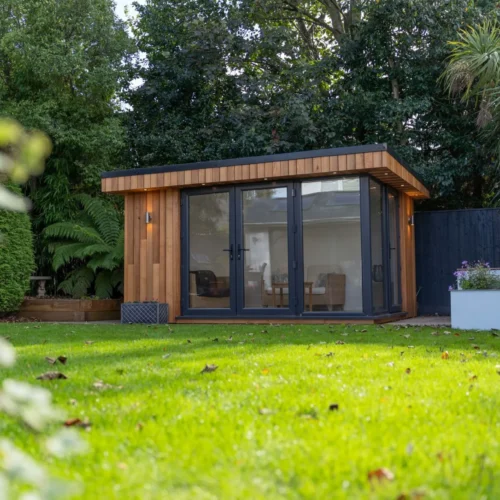
A garden room that feels exposed rarely gets used to its full potential. Whether you’re working from home, hosting therapy clients, or simply unwinding after a long day, visual and acoustic separation from the outside world makes a genuine difference to the comfort and usability of your garden room. Secluded designs also tend to command greater appeal when it comes to property value, because buyers recognise a well-considered outdoor space.
For commercial and educational installations such as hotel garden pods, therapy rooms, and school buildings, privacy isn’t simply a preference; it’s often a requirement. Investing in natural privacy for garden landscaping and thoughtful screening early in the process means your space works harder for you, day in, day out.
Privacy Fence for Garden Rooms: Traditional and Modern Options
Fencing is often the first solution homeowners consider, and with good reason. A well-positioned fence can deliver immediate screening without waiting years for planting to mature, though the type you choose will shape both the look and feel of your outdoor space considerably.
Closeboard or Solid Timber Fencing
Closeboard fencing remains one of the most popular privacy fence options for garden rooms, and it’s straightforward to see why.
Pros:
- Provides immediate, solid privacy from day one
- Durable and long-lasting when properly treated
- Cost-effective compared to many alternatives
Cons:
- Blocks airflow, which can make the garden feel enclosed
- Creates a heavier, more imposing visual presence
- Requires periodic maintenance to prevent weathering
The key is positioning. Rather than boxing the entire garden in solid timber, consider using closeboard panels only where direct overlooking is a problem, leaving other boundaries more open.
Slatted or Louvred Fencing
Slatted and louvred panels offer a more contemporary take on garden room boundary solutions, and they’re increasingly popular in modern builds.
Pros:
- Allows airflow to pass through while still obscuring sightlines
- Clean, modern aesthetic that complements contemporary garden room designs
- Angle of slats can be adjusted for partial or full visibility control
Cons:
- Offers less sound reduction than solid panels
- Slightly higher cost per panel than standard closeboard
Again, positioning matters as much as style. A run of slatted fencing along one boundary, combined with planting elsewhere, tends to feel far more considered than a uniform fence all the way round.
Planning Considerations
Before installing any fencing, it’s worth understanding the UK’s permitted development rules. In most rear gardens, fences up to 2 metres in height are permitted without planning permission, though this drops to 1 metre where a boundary adjoins a highway. It’s also essential to carry out boundary checks before installation, as disputes over ownership can complicate matters significantly. If you’re unsure, our team is happy to offer free, practical advice.

Hedge vs Fence for Privacy: What Should You Choose?
The hedge vs fence for privacy debate is one we revisit with many clients, and there’s rarely a single right answer. Both have genuine strengths, and in many cases the best solution combines the two.
| Factor | Hedge | Fence |
| Time to Establish | Slow | Immediate |
| Maintenance | Ongoing Trimming | Occasional |
| Aesthetics | Natural | Structured |
| Sound Reduction | Moderate | Strong |
| Airflow | Good | Limited (solid fence) |
For long-term natural privacy in garden landscaping, hedging is hard to beat. Laurel establishes quickly and provides dense, year-round coverage. Meanwhile, photinia offers a splash of seasonal colour alongside reliable screening, hornbeam is an excellent choice for formal boundaries, while clumping bamboo varieties (it’s important to avoid running bamboo, which can become invasive) work particularly well in urban settings.
The smartest approach tends to be layering. Privacy screens for garden rooms needn’t rely on a single method. Instead, combining a low-to-medium fence with hedging behind it gives you immediate screening that matures into something far more beautiful over time.
Screening Ideas for Garden Rooms
Not every garden suits a full fence or a maturing hedge, which is where purpose-built screening panels come into their own. These are two versatile screening ideas for garden rooms that are worth considering.
Bamboo Screens for Garden Buildings
Bamboo screens for garden buildings have become a go-to option in urban and compact gardens, offering a natural, lightweight solution without the permanence of fencing or planting. They’re affordable, straightforward to install, and bring a warm, organic quality to any garden room setting. In exposed locations, secure fixing is essential to prevent panels shifting in the wind.
Trellis Privacy Solutions for Garden Room Designs
Trellis privacy solutions for garden rooms work brilliantly as a transitional layer between open space and solid boundary. Panels can support climbing plants such as clematis, jasmine, or ivy. They retain light while softening the boundary. In compact gardens, this layered approach adds depth and visual interest without creating a heavy, enclosed feel.
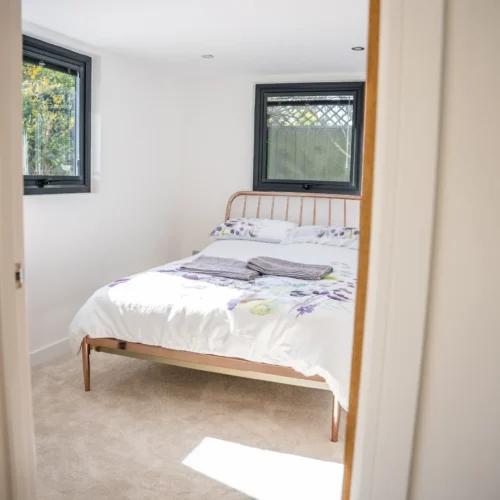
Glass, Glazing and Internal Privacy Solutions
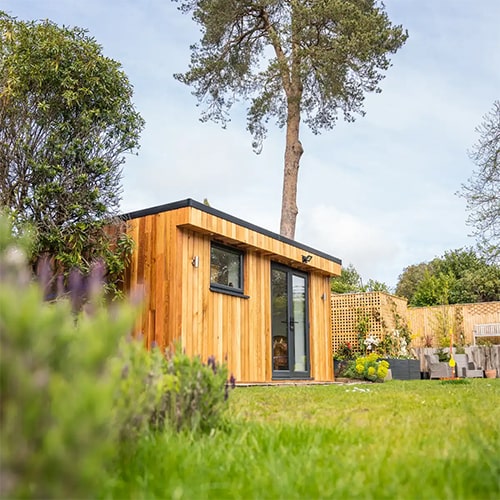
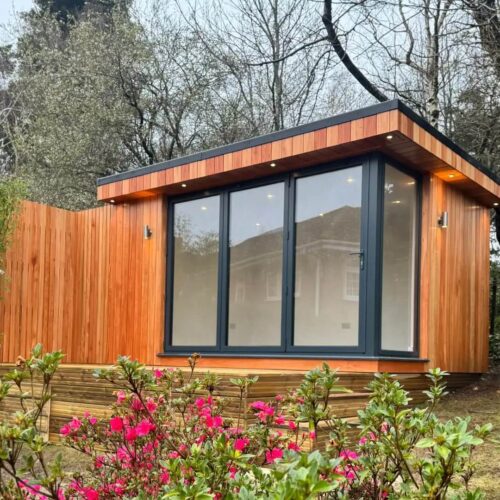
Garden rooms often feature generous glazed panels, but large areas of glass in an overlooked plot can quickly undermine seclusion. Garden room privacy, in this context, starts at the specification stage.
There are several effective options to consider:
- Integrated Blinds within Glazing Units: Flexible light control with no maintenance.
- Tinted Or Solar-control Glass: Limits outside visibility on south- or west-facing elevations.
- External Brise Soleil or Slatted Shading: Reduces overlooking from above.
- Frosted Lower Panels: Protects privacy at eye level while retaining openness above.
Privacy screens for garden rooms are far more effective when built into the specification from the outset. Explore our page that covers garden room specifications to see how features such as windows and doors are tailored for year-round comfort and privacy.
Balancing Privacy with Light and Airflow
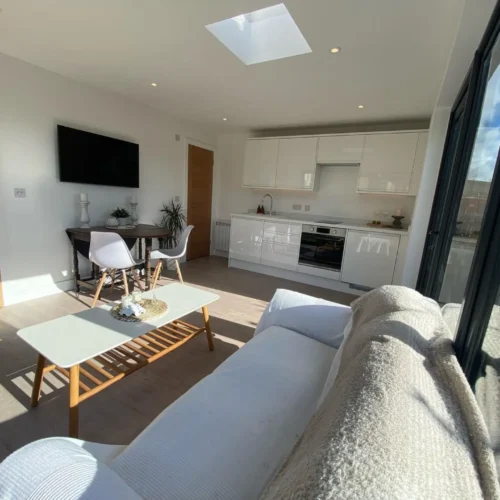
Secluded garden office ideas should never mean dark or airless ones, but it can be a bit of a double-edged sword: screen too heavily on all sides, and you risk creating a space that feels oppressive rather than restful. The goal is thoughtful privacy, never total enclosure.
Orientation plays a significant role here. Positioning doors and glazing to face away from boundary lines, or towards a more open aspect of the garden, reduces overlooking without sacrificing natural light.
Angled louvre panels and zoned landscaping can do similar work more subtly. In summer particularly, cross-ventilation matters: leaving opposing elevations more open ensures the space stays comfortable without relying entirely on mechanical cooling. Garden Room Solutions designs buildings that are both private and bright, because we know one should never come at the expense of the other.
Planning Rules and Considerations
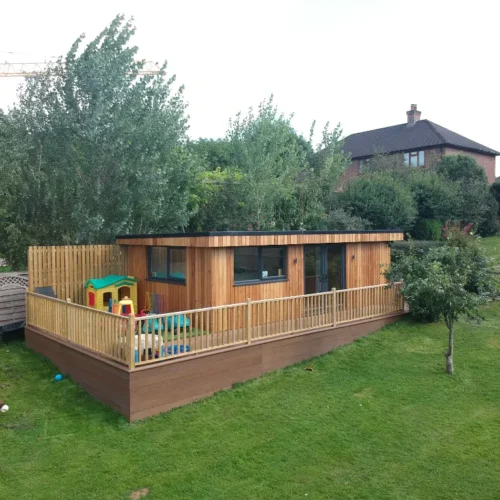
Garden room planning rules in the UK are worth understanding before any screening work begins, not just in relation to the building itself but to fencing and planting as well. Most garden rooms fall under permitted development rights as outbuildings, but height restrictions apply. Within two metres of a boundary, the maximum eaves height is 2.5 metres. Tall fencing can sometimes compound planning considerations, particularly if it affects neighbouring light or visibility near a highway.
Garden room privacy considerations shift further for listed properties and conservation areas, where permitted development rights may be restricted or removed entirely. Our team has experience across residential, commercial, and educational projects, and we’re well placed to help you navigate these questions early, before they become complications.
Privacy Design for Commercial and Education Garden Rooms
Commercial and educational clients often have more specific privacy requirements than domestic homeowners, and it’s an area where experience genuinely counts. Hotels installing garden treatment rooms or wellness pods need discreet, well-screened spaces that feel separate from the main property without appearing isolated.
Schools commissioning garden buildings must factor safeguarding considerations into every aspect of design, including sightlines, boundary treatments, and access routes. Office pods used for client meetings or focused work require visual separation from surrounding areas to maintain a professional atmosphere.
Privacy screens for garden rooms in these settings are rarely an add-on. They’re part of the brief from the outset, and our team brings the same meticulous approach to commercial and educational projects as we do to every bespoke residential build.

Start Your Garden Room Project the Right Way
Garden room privacy works best when it’s considered early, designed thoughtfully, and delivered as part of a cohesive build rather than fixed after the fact. The most successful projects layer fencing, planting, and glazing solutions together, each element complementing the others to create a space that feels naturally secluded without ever feeling closed off.
Whether you’re creating a peaceful home office or a private commercial space, our team designs garden rooms that balance privacy, light, and architectural quality. With nearly 20 years of combined experience and a passion for bespoke, high-quality builds, Garden Room Solutions brings the kind of considered expertise that makes a real difference to the finished result.
Speak to our team today. Call us on 01202 081198 or get in touch via our contact form to discuss your project and receive a free design consultation.