Your roof is the part of your garden room you’re least likely to think about until something goes wrong. It sits out of sight through every season, dealing with whatever the British weather throws at it, and for the most part, it just gets on with the job. But garden room roof maintenance does matter, and doing it well is straightforward once you know what to look for.
Whether you own an insulated garden building or you’re weighing up your options before buying, this guide covers what you need to know about the three most common flat roof types: EPDM rubber, traditional felt, and green roofs.
What Different Garden Room Roof Types Mean for Maintenance
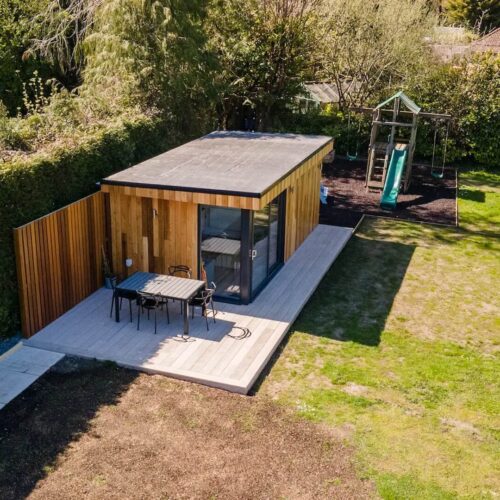
The roof type fitted to your garden room shapes not just the building’s look but also the ongoing attention it needs. Luxury garden rooms are typically finished with either an EPDM rubber membrane, mineral felt, or a green roof system, each with a different lifespan, varying wear resistance, and a different maintenance schedule.
What they share is this: all flat and low-pitch roofs benefit from periodic inspection, particularly after the autumn and winter months when debris, standing water, and temperature fluctuations do the most work. The difference lies in what you’re looking for and how often you look.
Garden room roof insulation also plays a role here. A well-insulated roof deck reduces thermal movement in the covering above it, which helps any membrane or felt layer perform closer to its rated lifespan. As such, knowing your roof type is the starting point for everything that follows.
EPDM Rubber Roofs: What to Inspect and When
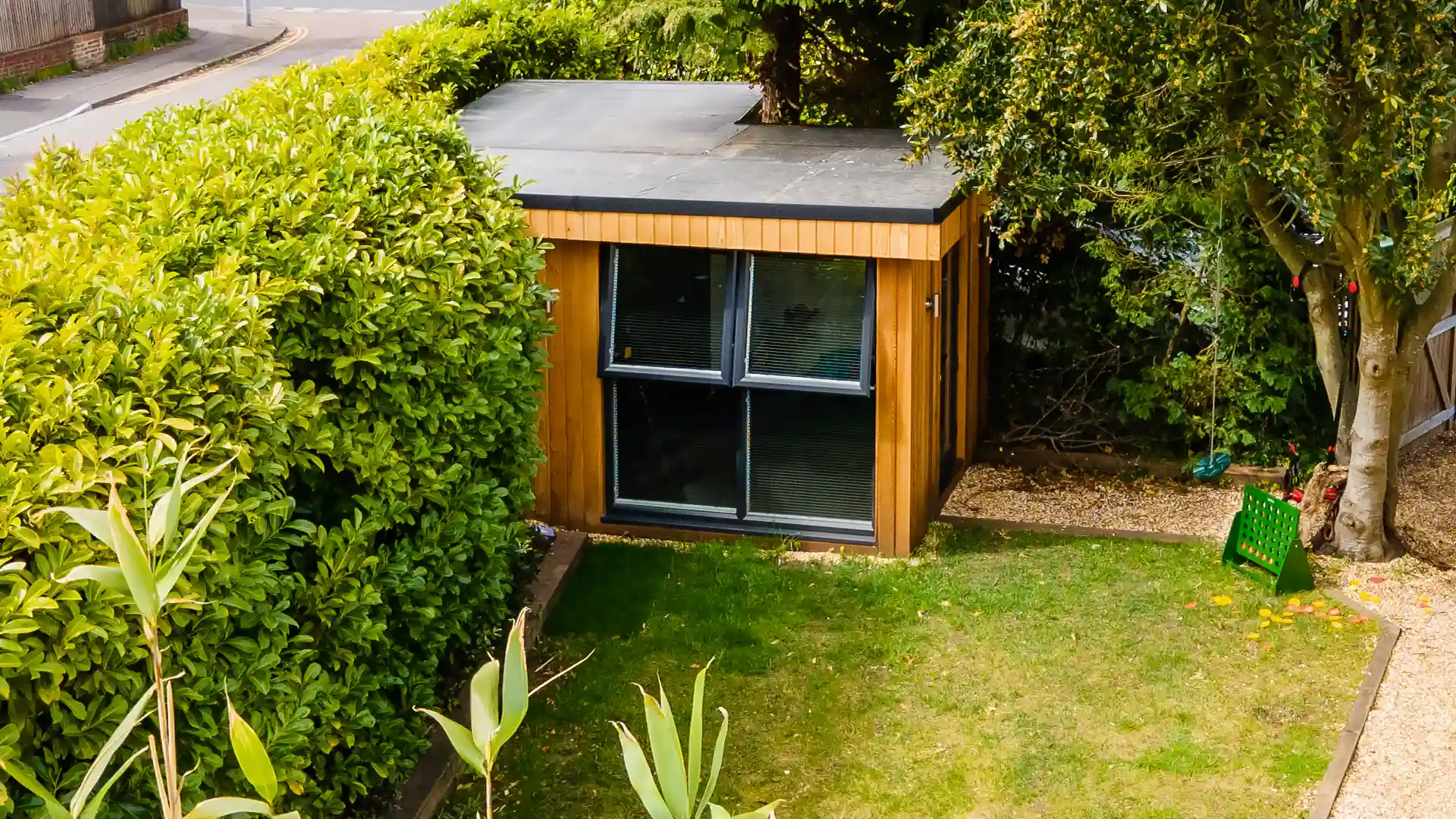
EPDM is the most widely used flat roof covering on modern garden rooms, and with good reason. It’s highly durable, UV-resistant, and handles the wet British climate well. Good garden room EPDM roof care largely involves staying on top of a simple inspection routine rather than frequent repairs.
Twice a year, in spring and autumn, check the following:
- Seams and Edges: Look for any lifting, bubbling, or separation at the perimeter where the membrane is bonded to the fascia or upstand. These are the points most likely to admit water if left unattended.
- Surface Condition: EPDM should feel uniformly flexible. Cracking or hardening suggests UV degradation or an installation issue. Minor surface crazing on older membranes is normal; deep cracking is not.
- Drainage Outlets: Clear any leaf debris from outlets and check that water drains freely. Pooling water over extended periods can stress the membrane and the deck below.
- Penetrations: If your garden room has a rooflight or cable entry, inspect the flashing and sealant around it. These points are where the effort of garden room roof maintenance is most often repaid.
A well-installed EPDM roof requires very little intervention between inspections.
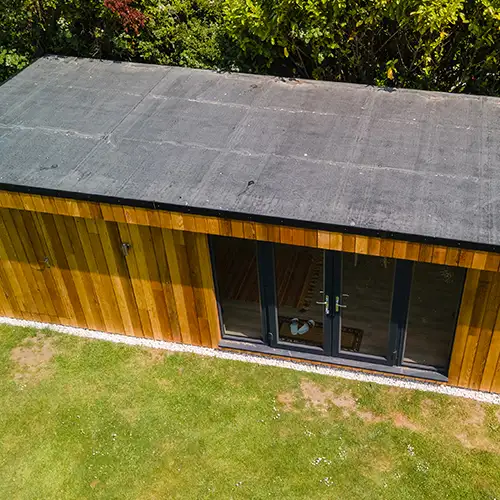
Felt Roofs: Lifespan, Warning Signs and When to Act
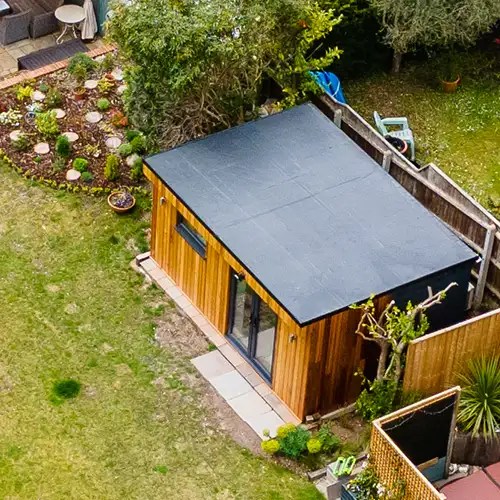
Traditional mineral felt is a cost-effective covering that remains common on older garden rooms and timber-framed outbuildings. Understanding the lifespans of garden room felt roofs helps you plan ahead rather than react to a problem once it’s already inside the building.
A standard three-layer felt roof has a lifespan of roughly 15-20 years under normal conditions, though exposure, the quality of the original installation, and the condition of the deck beneath it all affect this. As it ages, felt becomes brittle, loses flexibility, and starts to crack along lap joints and at upstands.
Warning signs to watch for include blistering on the surface, visible cracking or splitting, mineral granule loss in concentrated patches, and soft or spongy areas when you apply gentle foot pressure. Moss and algae growth can also hold moisture against the surface and accelerate deterioration.
If you spot any of these signs, the question is whether the damage is localised or widespread. Small splits or lifted laps can often be addressed with a compatible cold-applied repair compound, but if the membrane is failing broadly, garden room flat roof repair at that stage typically means a full re-cover rather than a patch. Catching it early makes a significant difference in cost.
Green Roofs: Substrate, Drainage and Seasonal Upkeep
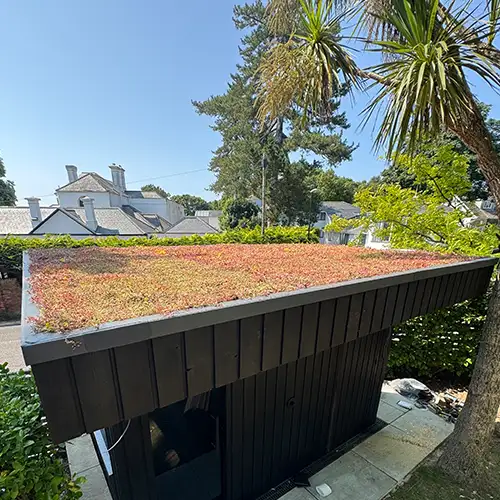
Green roofs add real visual character to a garden room and offer practical benefits too: they provide additional thermal mass, support local biodiversity, and manage rainwater runoff more gradually than a bare membrane. Green roof upkeep is more involved than EPDM or felt, but not excessively so once you understand the system.
The structure beneath a green roof matters as much as what grows on it. A correctly specified build includes a root-resistant membrane, a drainage layer, a growing substrate, and the planting itself. For insulated garden buildings, the specification also needs to account for additional loading on the roof deck, which is why green roofs are best planned at the design stage rather than retrofitted.
Seasonal tasks include removing self-seeded weeds before they establish deep root systems, ensuring drainage outlets remain clear, and topping up substrate in areas where it has thinned or washed away. In dry summers, sedum and wildflower mixes are largely self-sufficient, but an extended dry spell may warrant occasional irrigation. For garden annexe living spaces where a green roof forms part of the appeal, annual inspection by a specialist is a worthwhile investment.
If you’re interested in how eco-friendly features like green roofs are incorporated into a bespoke build, our guide to eco-friendly garden room features covers the options in more detail.
Seasonal Garden Room Roof Maintenance Checklist
A consistent inspection routine is the most reliable way to extend the life of any flat roof covering. The checklist below applies across all three roof types and is worth working through twice a year: once in early spring after the worst of the winter, and once in late autumn before temperatures drop:
- Spring: Clear debris from the roof surface and drainage outlets. Inspect seams, edges, and any flashings for movement or lifting. Check internally for any signs of moisture ingress around roof lights or ceiling boards. Note any areas of moss growth and treat with an appropriate biocide solution.
- Autumn: Repeat the drainage and surface checks. For felt roofs, look closely at any laps and upstands before standing water becomes an issue over winter. For EPDM, confirm that all bonded edges remain secure. For green roofs, remove self-seeded woody growth and check substrate levels.
A garden room roof inspection doesn’t need to take long. The point is regularity, not exhaustive survey work. For a multipurpose garden room used year-round as an office, gym, or studio, the cost of a minor repair caught early is a fraction of what water ingress can cost if left unchecked. Our broader seasonal maintenance guide for garden rooms covers the full building, not just the roof, and is worth bookmarking alongside this checklist.
How Long Should a Well-Maintained Garden Room Roof Last?
So, how long does a garden room roof last? The honest answer depends on the material, the quality of the original installation, and how consistently it has been looked after. With that said, the ranges are well established.
A correctly installed EPDM membrane can last 25-50 years. Traditional felt, as noted earlier, sits at 15-20 years on average. Green roof membranes are typically specified to last 25-40 years or more, with the waterproofing layer often outlasting the planting system above it.
The difference is visible in practice. Our Verwood home office build shows the standard of detailing that contributes to a roof performing across its full rated lifespan.
What all three have in common is that regular garden room roof maintenance significantly extends their working life. A felt roof, inspected and patched at the right moment, may last comfortably for fifteen years; one left unchecked from year eight may need full replacement by year twelve. For luxury garden rooms where the quality of materials throughout reflects the investment made, it’s worth treating the roof with the same care as the rest of the building.
Garden room roof insulation and roof covering work together as a system. Maintaining both in good condition protects the interior environment, maintains stable energy performance, and preserves the building’s value. For insulated garden buildings designed for year-round use, that combination is worth looking after.
Talk to the Garden Room Solutions Team
If you’re not sure what type of roof your garden room has, or you’d like to discuss a new build and what to expect from it in the long term, we’re happy to help. Get in touch with Garden Room Solutions using our contact form or call us on 01202 081198, and we’ll give you straightforward, honest advice with no obligation.